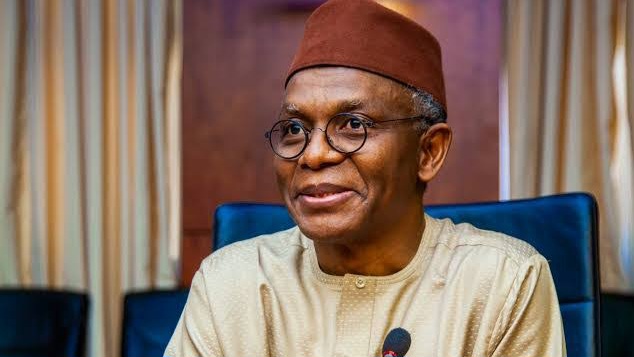


 Ayodele Fayose was not just in government in his time as Ekiti State governor, he was in power. Well, that assertion belonged to the military era in Nigeria, because it originated from that obnoxious past. A military president actually owns the copyright, going by reports in news outlets of that period. But, in all honesty, Ayo Fayose was indeed a governor. He was fully in charge of his government, and held firmly the reins of his politics. From what the eyes could see, he competently covered everywhere in the state and cowed anyone who stood in the way of his ways. He was loud, bold and boisterous even in his humanity. He was affirmative and took no prisoners. Governor Fayose was in charge indeed.
In contrast, Ayo Fayose as governor was far from one governor like that who turned out to be a Knight in Rubber Armour. That knight’s resilience didn’t meet the requirements of the communities in our popular oily rivers. The sissy seemed like a misfit and, eventually, has proven to be both. He also proved to be a mock sword indeed with the way he unravelled badly. He capitulated very shamefully when it was earnestly expected of him to make an impact! No, Fayose was not that kind of spineless character when he governed Ekiti State. Not a few Nigerians would agree that he fought wars but he was never at any time regarded as anyone’s sissy.
However, one late afternoon, Fayose showed a side of him that was not propped by that prevalent toughness. He willingly displayed the soft underbelly of that ordinarily steely structure Ekiti people know as Òshòkòmolè. Fayose, the governor who bestrode Ekiti State like the Irúnmolè (a deity) which was part of his cognomen, showed on that day that he was human after all. He saw a waiting, sure responsibility of the office but he willingly dodged it. He cringed and brazenly recoiled at the sight of the file. In fact, he pushed the file off his immediate vicinity like an offensive matter. Then, he followed the shoving with a verbal warning that the civil service officials bringing that file should desist from bringing it near his sight. He also spoke sternly in reprimanding the government official as he reminded him that he had once told them his disposition towards that same file.
The concerned official only muttered a few words as he stepped back from the governor’s table where he had just picked the rejected file. His face was light-hearted, his heart was not heavy and his steps were brisk. The reaction of that official, who was dressed smartly in a fine suit, was a reflection of the light-hearted but serious encounter. The file was the business of Ekiti State, the business of only the Governor of the State even though Governor Fayose wanted it to be at arm’s length. And it looked like the file had been on a carousel…
The file? Fayose told the small group of people in his office that the file contained the names of prisoners condemned to death by the courts. The Nigerian 1999 Constitution mandates state governors to sign the death warrant for prisoners sentenced to capital punishment. “So, if I sign that file now, it means that they will go and kill those people? May no human life be lost through my hands. God forbid!” He said this in Yoruba. His words were emphatic and his face returned to the cringe of the time he saw the file that afternoon.
Fayose thus became his own sissy before a mere file. He dissolved into emotions when the humbling realisation dawned on him that the law placed the power of life and death in his hands as the governor of Ekiti State. That experience brought Governor Fayose into another realm of focus. It also brought the pressure behind the glamour of that office into a vivid relief. How many state governors sign death warrants? Is it their emotions or do they come under pressure by the advocacy of religious groups, pressure groups and civil society organisations? There has been a sustained call by the United Nations for a moratorium on the death sentence, and focus has been on Nigeria which officially has the death sentence but hardly carries out executions.
Well, save for the execution of Sani Yakubu Rodi in Katsina State in 2002, and the hangings done under Governor Adams Oshiomhole of Edo State between 2012 and 2016, what have the executioners been doing? Which other executions have been recorded in the country outside these? Do we still have executioners in government employment? What does a hangman even look like, and what is his remuneration? What’s in it for the man whose job is to execute the condemned What is their compensation? For the governors and their idle hangmen, it is a dilemma between a legal duty and morality.
This happens to represent one of the ugly chapters in the perennial prison congestion story in Nigeria. Think about arbitrary detentions, prosecution woes, official recklessness by people in authority, and other such reasons we have prison congestion. In mid-2026, the Nigerian Correctional Service disclosed that the total number of prison inmates in Nigeria hovers around 80,000 to 82,000, out of which between 51,955 and 53,670 are awaiting trial. Out of this number, 3,688 inmates are on death row. So, with about 65 percent of the total prison inmates in Nigeria being pre-trial detainees not convicted of any crime yet, then a lot must be happening behind those high walls of prison.
One of the numerous happenings behind the high fences of the correctional centres was reported by Saturday Tribune on 1 August, 2026. Or, you didn’t read the Saturday Tribune that weekend? In that edition, an exclusive report of a man who was tried for murder, and was sentenced to death by the law courts but was living large even while on death row, was published. The condemned man was in a correctional centre in Ogun State called Ibara Medium Custodial Centre. The name of the man on death is Elijah Oyebode. Elijah Oyebode was living large and was running businesses (“running things” they call it) from what must have been his palatial corner of the prison – sorry, Correctional Centre. He was also hosting live TikTok sessions and was interacting freely with the population. He had access to social media, had an account and was actively running it. Perhaps, he must also have been an ‘influencer’ while still coordinating drug rings from the correctional centre.
A man sentenced to death – condemned man – in a correctional centre is a huge lobe of contrast. But this paradox is challenged by the belief that he might repent and get a reprieve. But while reprieve is yet to come, this same man chose a path – to run his businesses from the safe enclosure of his cell in the prison in Ibara. These kinds of abnormalities could explain why the civil servants would keep returning that rejected file to their governor. When the governor appends his signature and gives life to the sentencing, the country might be saved such tainting embarrassments as we witnessed in Abeokuta prison.
However, with the governors sissying about the condemned prisoners’ matter, regardless of their duty to the nation, perhaps it is time to find real alternatives to the death penalty. Alternatives might save governors the burden and save the country from violating international conventions and the heave of pressure groups. Home-grown alternatives will save us from seeing the sissy side of Fayose.
But, on a closer look, one will wonder if we really need any more hangmen and executioners. We seem to have them in abundance everywhere in the country. The difference is that these executioners are not in formal employment like those who would need the governor’s signature to be able to act. With people like Sheikh Sani Jingir and Francis Fadahunsi, do we still really need the governor’s approval for executions? Who approved the killings that have been recorded across Osun State as the people go to the polls today? Perhaps those in prisons might feel safer than ordinary Nigerians who are unsure of what security situation stands in wait for them as they travel Nigerian roads. Even those in the condemned cells awaiting the hangman are even sure that the respective state governors don’t have the balls to sign their death warrants. They might even live with a better rest of mind than those in Jingir’s kingdom.